
Threatened Species Detection
Condamine Earless Dragon
Tympanocryptis condaminensis
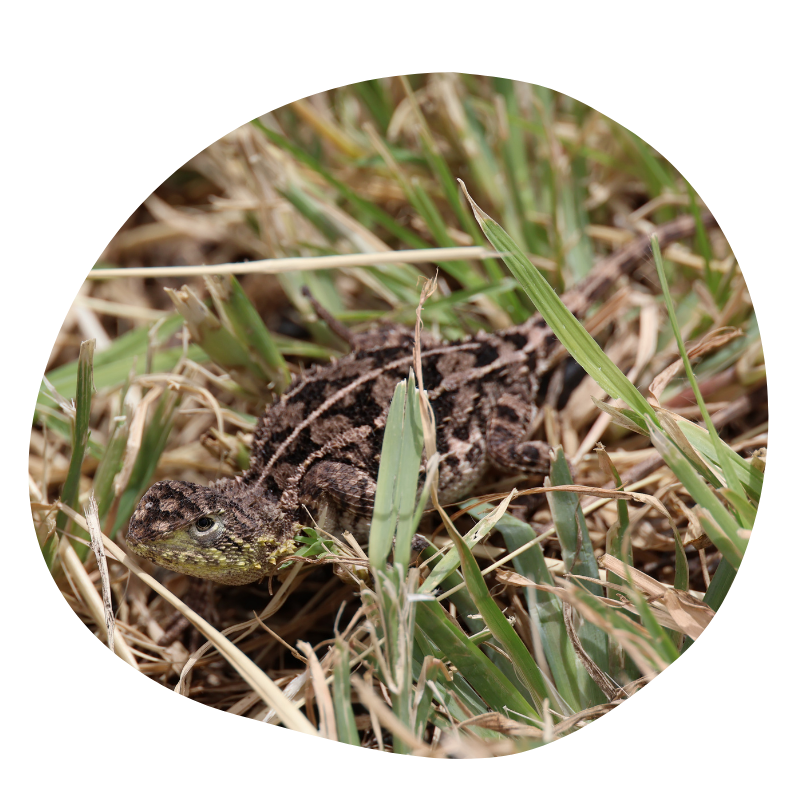
Speedy, beautiful, and sneaky, this mini lizard lives in the grasslands of Condamine, Queensland. We have just concluded a successful detection project to develop capacity for this species, which concluded that dogs have a critical role to play - especially in pre-clearance work, out of season, and where density is low. Evie is available to support earless dragon research, monitoring, and management across Australia.


Pilbara Leaf Nosed Bat Roosts
Rhinonicteris aurantia
Our specialised detection dogs have demonstrated effectiveness in identfying Pilbara Leaf Nosed Bat Roosts.
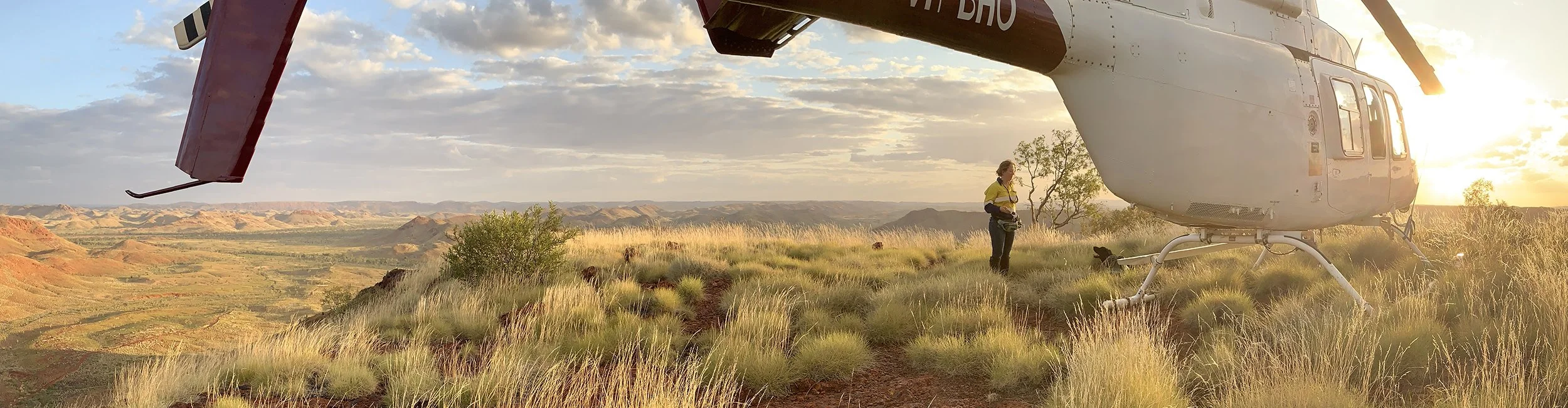
Our teams are highly experienced in remote areas and helicopter trained. For greatest efficiency, they are best combined with other technology for this target. Using acoustic techniques to narrow down the roost location and then deploying dogs to help pinpoint likely roost locations.

Tjakara (Great Desert Skink)
Liopholis kintorei
Our Tjakara teams are ready to rock!
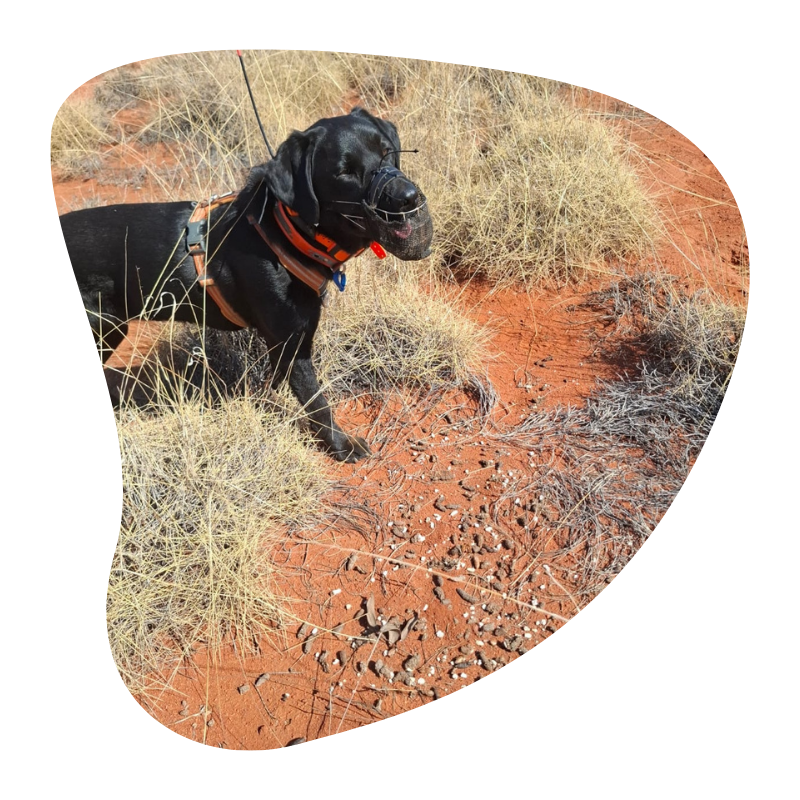
Combined with targeted search strategies, Detection for Good teams can facilitate both rapid assessment of presence across large areas and mapping populations in detail.

Western Swamp Tortoise
Pseudemydura umbrina
Our detection dogs have undertaken imprinting on captive and wild Western Swamp Tortoise and demonstrated competency at known sites in partnership with species experts. Dr. Barnes is an experienced herpetologist with a strong understanding of the species’ habitat requirements. Together our teams can support research, monitoring and pre-clearance surveys.

Research Highlights
Discover our
Latest Projects



FAQ
-
Anything we train them to! You can check out our current odours here.
-
That depends on the target, project, similarity of training materials to final target, final context and more. Dogs can learn a new odour in a few hours, and consolidate it in their library best with sessions spread out over a couple of months. The biggest challenges for very rare species can be search strategy, and setting the dog up to succeed in encountering the target. New landscapes and final odours very different to the training material may require in situ training and familiarisation, as each presents a new challenge!!
-
We are currently investigating options to train a cat and fox detection dog, but none of our current dogs are trained on this odour. Should you be interested, get in touch about the timelines and scale of your project, as this will help us plan our future acquisition and training schedule.
-
Nope! Our dogs a trained to have a passive alert - that is, they don’t interact with the target at all. This is usually a down, but may also be a sit or freeze behaviour as needed.
-
There are absolutely ways to be successful with limited options, and we are passionate about making projects work for species in need, but we are going to need material to train the dogs on. More limited material means slower progress.
-
Great question! Yes, with training. If species have similar diets, it is important to train discrimination, as otherwise, the scent may appear similar in the field. For this reason, if dogs are trained on samples from captivity, or a different part of the range, there can be a period of adaptive in-field training to clarify target odour.
-
Nope! Dogs can find scat, but they can also find live AND dead targets.
-
Great question! All our dogs are trained not to interact with other wildlife, a skill which is constantly reinforced. All teams dog and human) pass a co-operation and communication assessment to ensure that they can comply with safety standard including responsiveness to safety cues such as emergency stops and recalls in the presence of wildlife and vehicles.